Auto Agentic Team
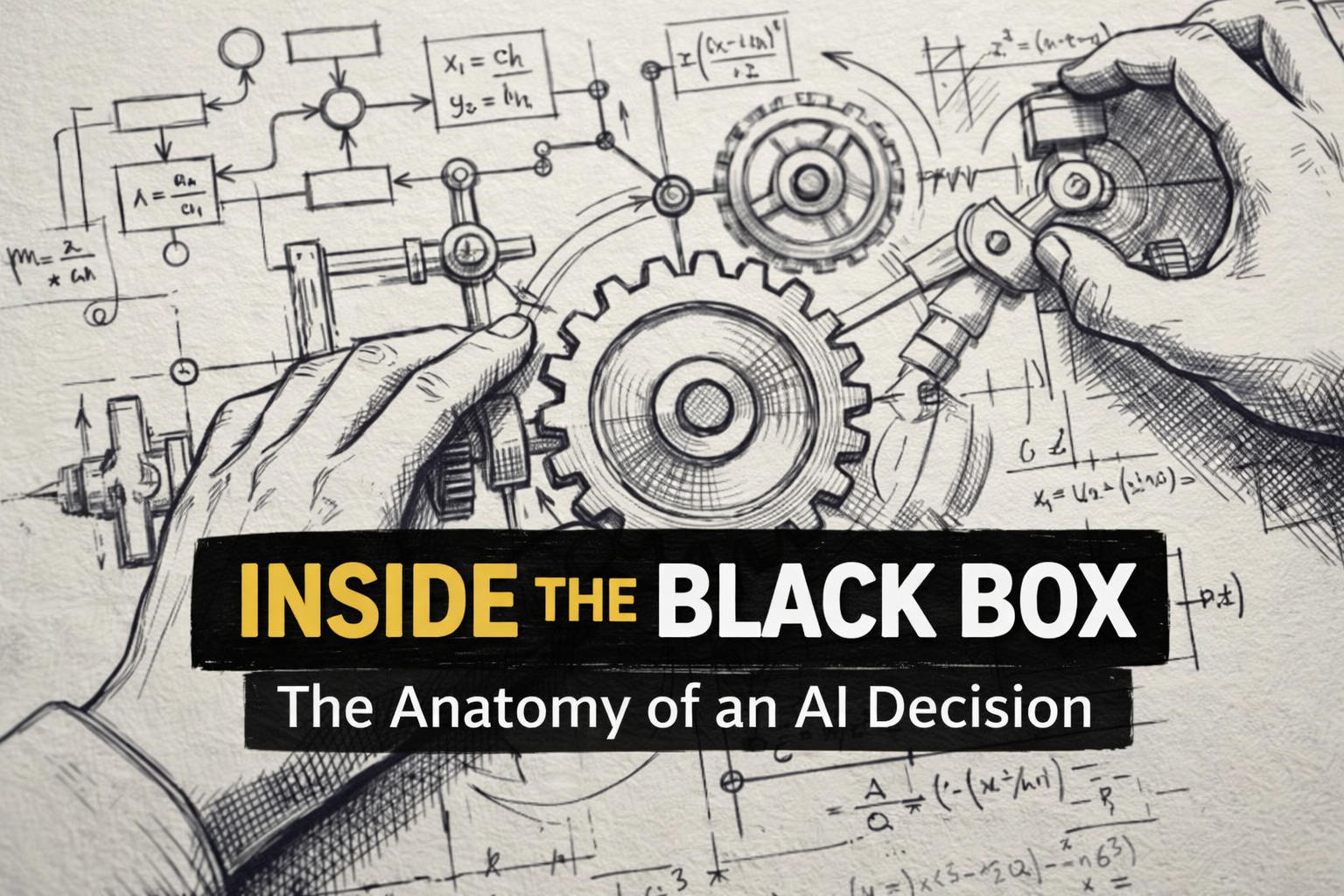
The Architecture of an AI Brain: AI Models Explained
The words algorithm and model are thrown around constantly in conversations about artificial intelligence, usually as if they mean the exact same thing. In reality, these two concepts sit at opposite ends of the development process. Conflating them hides how modern AI actually functions — and why that matters for your business.
Algorithms: The Static Starting Point
An algorithm is simply a static mathematical procedure — a rigid, step-by-step set of instructions written by a human to solve a specific problem. Early artificial intelligence, known as symbolic AI, relied entirely on these rigid instructions. Developers tried to explicitly code rules for every possible scenario.
But the real world is simply too unpredictable to hard-code. To achieve true machine learning, developers stopped trying to process tasks with static rules. Instead, they used algorithms to ingest massive amounts of raw data and forge an entirely new entity: the model.
The Model: An Autonomous Brain
The model is the autonomous brain produced by the synthesis of data and algorithms. This shifted computing away from following rigid instructions toward a system of dynamic, data-driven learning.
Think of a neural network as a structure built to mimic the human brain. It learns by passing massive datasets through layers of interconnected nodes. Inside this network, every connection has a parameter called a weight — determining the exact strength and influence of an incoming piece of data. Each node also contains a parameter called a bias, which acts like an offset dial, shifting the activation threshold so the network can fit messy, real-world data.
How Decisions Are Made
When making a decision, an input is multiplied by a weight, shifted by a bias, and pushed through an activation function. This mathematical equation introduces non-linearity, allowing the model to learn complex patterns instead of straight lines.
An AI model does not store a database of facts. Its entire knowledge base is held within a collection of millions — or even trillions — of these perfectly calibrated weights and biases.
Training: From Random Guesses to Precision
When a model first begins training, its weights and biases are randomized. It makes a blind guess, calculates how far off that guess is from the actual data, and then has to figure out how to fix the mistake.
It uses back propagation, a critical algorithm that works backward through the network, fine-tuning parameters to minimize the prediction error. This optimization scales up massively in advanced architectures like Transformers.
Transformers use a mathematical technique called attention to weigh the importance of different parts of a data sequence, identifying how elements influence one another. When you speak to a digital assistant, the model doesn't process individual words in isolation — it uses its optimized parameters to weigh the surrounding words, parsing the context to understand human speech.
The training phase ends when the error rate is minimized. What remains is a frozen, highly optimized Decision Engine ready to be deployed into the real world.
Two Types of Deployed Models
Once deployed, a trained model generally applies its parameters in one of two ways:
- Discriminative models are boundary drawers. They classify data by predicting conditional probability — allowing them to determine if an object is a vehicle or a pedestrian.
- Generative models are distribution mappers. They calculate joint probabilities to assemble entirely new, highly probable sequences of text, audio, or imagery from scratch.
Whether a system is categorizing a photograph or writing a complex essay, its capabilities rely entirely on the exact mathematical parameters locked in during its training phase.
The Bias Problem: A Mirror of Its Creators
Every weight and bias is forged by a specific dataset. Because that data consists of human-written text and human-captured images, the resulting model acts as a permanent mirror of its creators.
This creates a conflict between the necessary mathematical bias used to fit data and the devastating reality of systemic human bias. When historical human prejudices and blind spots are present in the training data, those flaws become permanently encoded directly into the model's foundational weights.
A biased human manager can be retrained or replaced. A biased AI model applies its prejudice automatically, instantaneously, and often undetectably across thousands of bulk decisions at once. Excising this systemic bias is nearly impossible — to remove it, engineers would have to unbake the millions of intertwined mathematical parameters that allow the model to function in the first place.
The Bottom Line for Automotive Leaders
AI is an autonomous collection of flawed human data mapped as probabilities — a powerful tool that demands intense scrutiny rather than blind trust. For automotive leaders evaluating AI solutions, understanding the distinction between algorithms and models isn't academic — it's the foundation of knowing what you're actually deploying in your dealership.
The question isn't whether AI works. It's whether you understand how it works well enough to deploy it responsibly.